
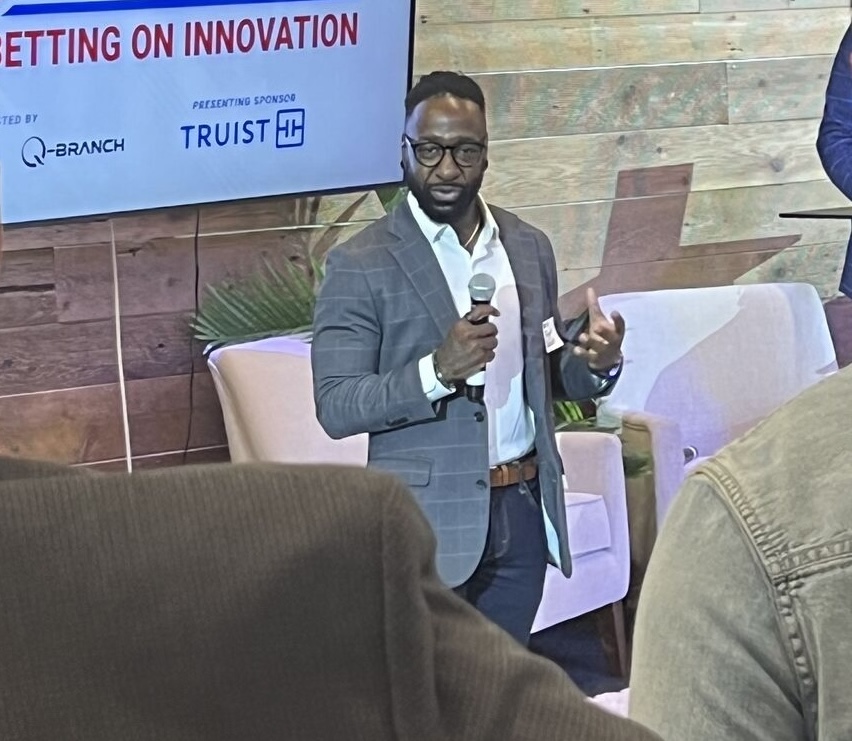
Dwayne Caldwell, co-founder and CEO of Enspi.io, has climbed mountains to build up his name and mental strength. His journey was about more than just achieving the success he has, it was also about being the best father, and sometimes coach, he can be.
The head of a very athletic family, Dwayne cheers from the sidelines during his daughter’s volleyball games, where she probably prefers him, he jokes. But he works much more closely with his 8 year-old son.
“I spent a lot of time coaching him on his jiu-jitsu journey,” he says. They even travel to tournaments together where they both compete in their own matches. “Now I live vicariously through him and all his championships. We have this internal battle of who has more gold medals.”
Watching his children thrive as athletes is a clear point of pride for Dwayne. But he once had his own dreams of sports greatness – before life violently dragged him elsewhere.
That Philly Hustle
Originally from Philly, Dwayne is now based out of Minneapolis, a place he’s lived for half his life. He grew up in a below average financial household, so life “wasn't always straightforward.”
This is part of the reason he began his entrepreneurial endeavors so young. “You're always looking for ways to support and help out,” he says. “So I've always had businesses – from lawnmowing, selling candy, all types of things.”
“I brought that hustle from Philly with me to Minnesota.”
But Dwayne never felt like he had fewer financial resources than anyone around him. “I didn't actually realize that I had less than, I guess, until I moved to Rochester.”
Financial Life Lessons
Income brackets weren’t a thing that came to mind when Dwayne asked his mother for $310 to join the ski club, the place you could find everyone every Friday. Her only reply was: "You're not going to ski club."
This ended up being a moment that stuck with him. During childhood, Dawyne says, people rarely teach you that "there are limitations to your dreams.”
But he already knew how to earn money, so he got scrappy – making enough to rent the required equipment. “These were the driving factors that initially started my life.”
This self-reliance is one reason he felt confident in leaving home at just 13 years-old. “I wanted more than I couldn't get at home,” Dwayne admits. “I also kind of perceived myself as a burden.”
These two things became defining forces in his life.
“Being young and out there – everything isn't easy. You have to be creative, to find – what am I going to eat today? Or where am I gonna stay? Or how am I gonna get this?” Dwayne explains. “You have to create your own opportunities for growth and to just move forward.”
“A lot of those lessons I carry with me today.
Mentor, Boxing
Despite being homelessness Dwayne always has his boxing coach there to give resources and, most importantly, out of trouble. His coach owned a construction company, so he hired the teen to work during the day and then they trained at night.
“So my boxing coach was a guide and mentor for me,” he says. “He really taught me the ropes of entrepreneurship, and working with him kind of broke that pattern. It was cool, 'cause it gave me insight into other possibilities for myself.”
But at 17 , he says, the path Dwane was creating for himself came to a sudden halt. During a boxing match, he took a punch to the face and ended up with an oral blowout fracture – basically shattered one side of his face.
This left Dwayne sidelined, which was something the ambitious kid wasn’t content with. He stepped back into the ring before fully healing and left the ring with another shattered plate.
“I was devastated because that was what I perceived as my way into this life that I thought I wanted,” he says. “Even though I boxed, I was always kind of in trouble. So that is kind of where it was a fork in the road for me.”
Dwayne believed his two options were to remain in his dangerous hometown or join the military. His coach pushed him towards getting out and straightening up his life.
So in 2002, Dwayne enlisted at 17 years old via the DEP Program Delayed Entry program. After his first tour, he was called back to the frontlines on IRR (inactive readiness reserve). He figured if had no choice in going back, he might as well re-enlist.
This deployment was tougher though – one that left deep, deep scars. He had lost really good friends during his tim overseas, two specifically that stood out. “We had all these plans to start businesses and just do so much stuff,” Dwayne reminisces.
By 2010, he was released due to issues with PTSD, as well as other various injuries that hindered his effectiveness. But even though Dwayne was out, the Army had failed to prepare him for one last mission: Returning to civilian life.
Transition Civilian Life
After joining the military to escape a lifestyle, he was back in the same toxic environment with even more issues. All of his anger, grief, and self pity led him into a reckless lifestyle. At times even believing “it would have just been better to stay over there and never come back.”
By 2014, Dwayne had reached the point where he knew he needed help and reluctantly began taking prescriptions. But as he settled into his new medicated norm, he was caught off guard by his daughter.
“She was, like, you're not fun when you take your medicine,” he reflects on. “Normally, I'm always joking, always playing pranks on her.”
It was at that moment, Dwayne decided to find his own path to internal peace, which led him to the book, “The Law of Attraction” by Rhonda Burns. It taught him how to rewire his thinking around the traumatic events in his life.
Dwayne had finally found the right path to start his long journey of healing.
Finding your Why
As he began to transform his mental health, he also began exploring the next step in his career. But Dwayne began running into wall after wall, realizing that his veteran status ended up being a hindrance towards career opportunities as a civilian.
“There's not a lot of transference in skill set that leads to starting a company within the tech space,” he reveals. “You can't go from infantry to all of a sudden starting a clean energy company. There's no relation there.”
But he figured out how to push through and secure a job where he rose up the ranks in the sales department, eventually earning the title of district manager.
“It resparked my interest for entrepreneurship,” Dwayne recounts, leading to him launching a marketing company with the goal of supporting locally owned, minority businesses. As he tells others, he had found his ‘why.’
For many, the transition process from active duty to civilian life can leave them feeling adrift.
In the military, Dwayne explains, you're told how to think, what to do, what to prioritize. For many, the transfer from having their existence defined “through another person's lens” and finding their own perspective.
“You lose yourself, so you have to find your why,” he says. “Once you are able to define and identify your purpose, you are able to start moving forward.”
He also feels this as a black founder. “I think as a black man, there's a stereotype, there's hurdles that we have to get over,” he continues."That has been the consensus – that we constantly have to work, constantly have to do more or show more, a lot of moving the goal post.”
But Dwayne’s time with the army was a major contributor to proving his potential to himself and learning how to “embrace the suck.”
“It lets you know the limits that we set for ourselves are normally our own ceilings.”
Solar Life
In a way, the military still wasn’t done with Dwayne. It was here he was introduced to the utility of renewable energy – and his life post military.
Back in 2005, a charging station was hard to come by in active war zones.
“I was the only one who would carry a solar pack to charge a DVD player,” he says, becoming known as the one man who could charge your phone – for a price ($10, to be exact).
While this was a very lucrative accident, he felt something deeper. “That's what started my interest in that tech and an entrepreneurial path.”
After finding his mental balance, Dwayne was ready to dive head first into an entrepreneurial career. It began with him building and selling a marketing company. His next business focused on consulting. The clients he worked with reintroduced him to solar energy, finding a particular interest in community solar garden development.
Dwayne saw a truly revolutionary approach to energy and knew it was something he wanted to pursue. So when a client asked if he could find subscribers for one of their gardens, he jumped at the chance.
He even began his own research and located what he thought was an ideal underserved area to test out expansion. The group brushed off his choice: "Let's just skip those areas and go into more affluent ones, more suburban areas.”
This was not a satisfactory answer and Dwayne pushed further. The group eventually admitted they believed that urban areas couldn’t be trusted to pay their bills. With this answer,
Dwayne suddenly found the drive to do everything they did but better, believing this could have a real positive impact.
Solar Founder
Breaking out on his own, Dwayne launched Solar City Energy to develop community solar gardens that helped every area code.
While he knew his company wouldn’t last long against the local real estate developers, it became his entry point into the industry. He also felt like he didn’t have enough knowledge around the industry to properly run this type of business.
After Solar City Energy (rebranded to Nextlight Energy), he decided to move into selling residential solar. Once he secured contracts for commercial jobs, he was introduced to battery storage projects.
This, in turn, inspired him to learn more about a whole new part of the solar sector. “I'm obsessive as well. So once I see something, I obsess about creating it and understanding it.”
Despite financial and logistical hurdles, he was able to launch Enspi in 2022, which combines the words energy and spikes.
While he is on another uphill battle with his niche under the current administration, he sees too many people who are passionate about climate change and renewable energy for the growth to stop.
He finds the tiny wins in connecting with people and founders that share the same mission.
“So many people understand this problem and so many people are working to try to solve it that it creates all this hope.”
Despite living on the streets, severe mental trauma, and getting his face smashed in, Dwayne fought through countless figurative and literal battles to make a better life for himself and family. And, it seems, he has finally made it to the top of that steep mountain.
About Beta Boom
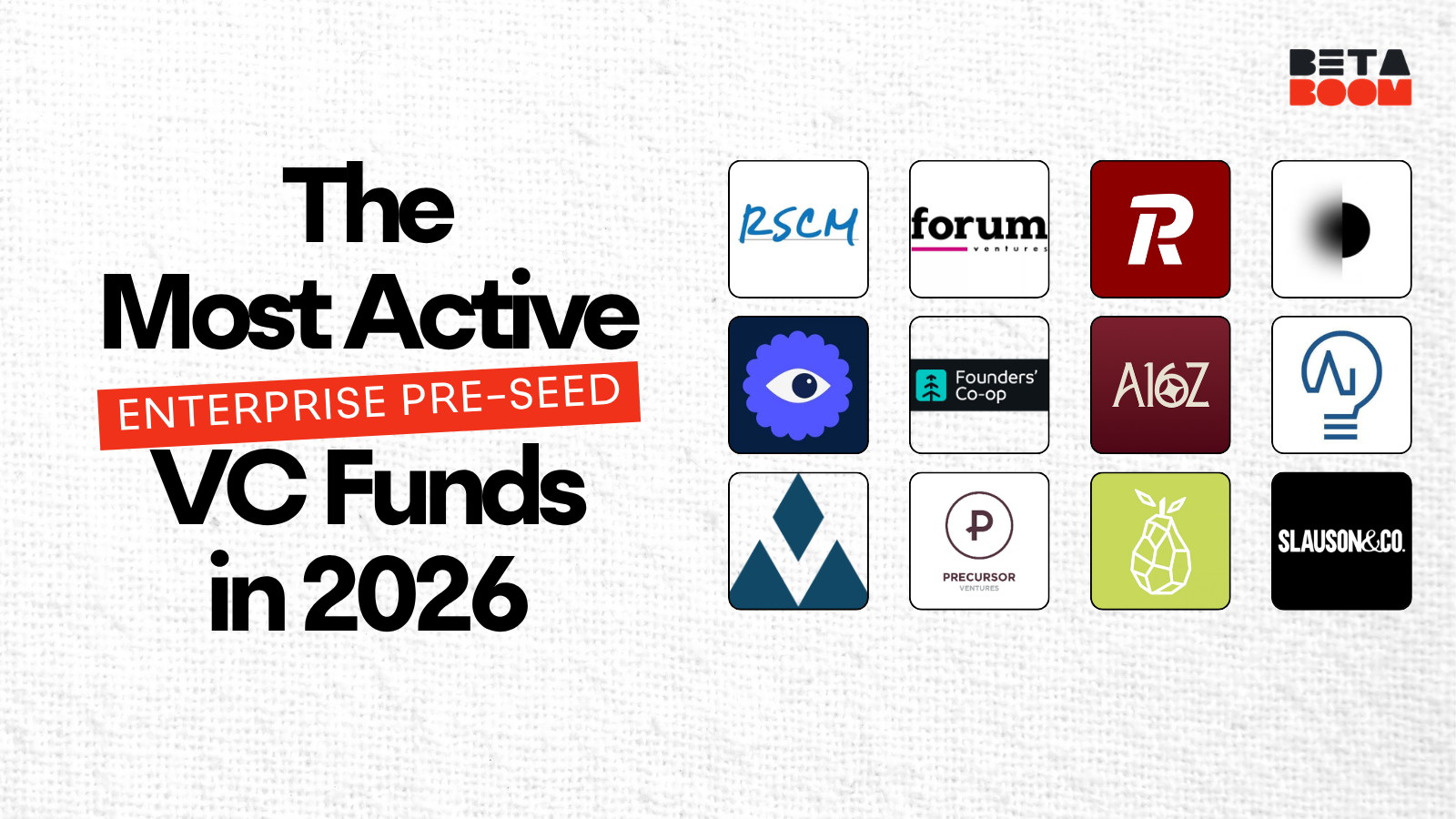
Beta Boom is a pre-seed fund investing in startups solving complex workflows in enterprise, cybersecurity, and health.

BETA BOOM BACKS PATTERN BREAKERS
Investing at the pre-seed and seed stages in founders who defy the mainstream.
.png)